
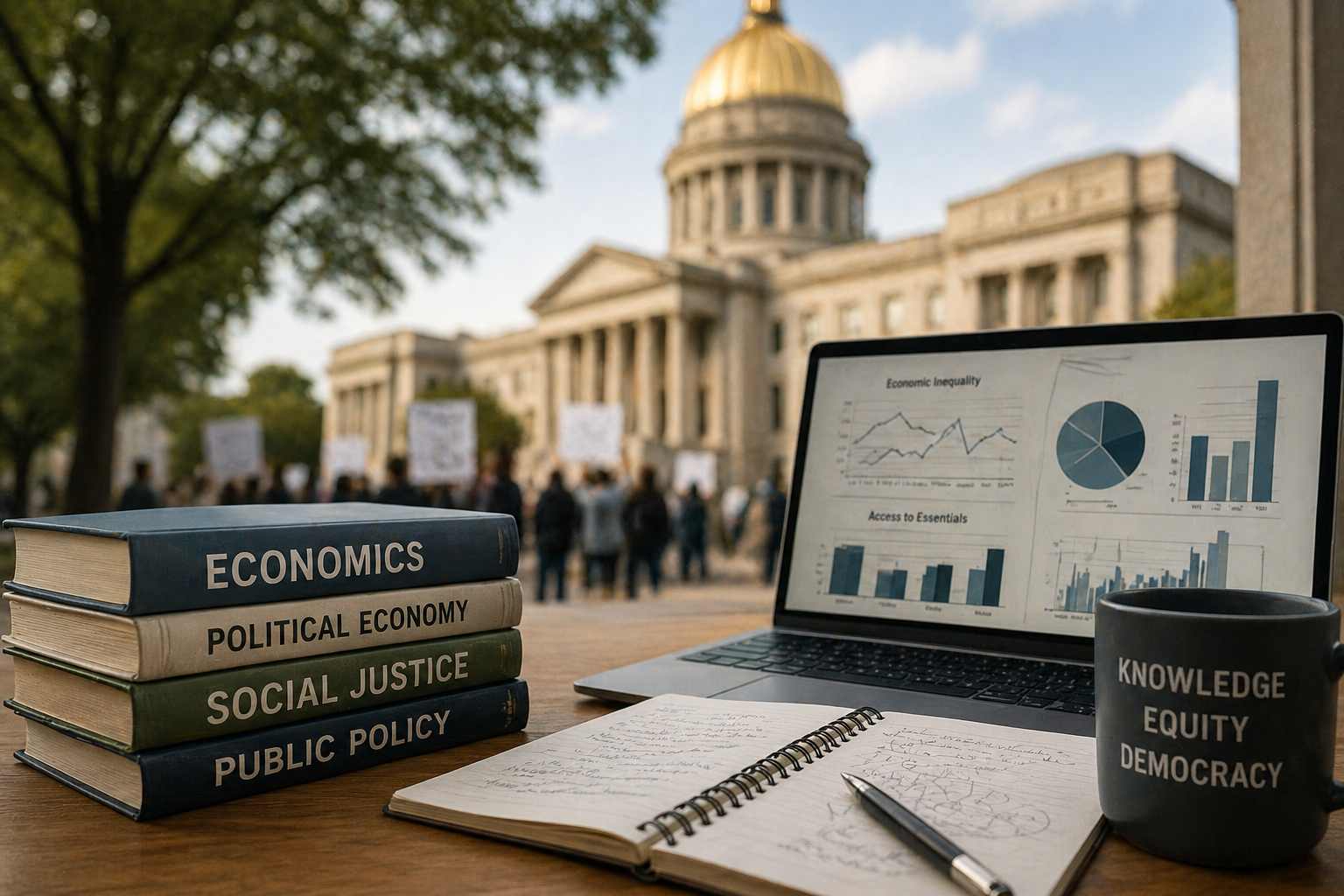
In a world shaped by complex financial systems and economic narratives, the ability to understand how economies function is no longer optional. It is essential. Economic literacy empowers individuals to make informed decisions, question dominant systems, and participate meaningfully in shaping society. Without it, citizens are left vulnerable to manipulation, inequality, and systemic injustice. As explored in World Peace by Burl Minnis, economic systems often operate as ideological frameworks rather than reflections of reality, making it even more important for people to develop critical awareness and reclaim their agency.
What Is Economic Literacy
Economic literacy refers to the ability to understand key economic concepts, systems, and structures. This includes knowledge of how money functions, how markets operate, how wealth is distributed, and how policies impact everyday life. It also involves recognizing the difference between perceived value and actual utility.
Minnis argues that many economic systems are built on abstract concepts rather than tangible realities. Money, for example, is not inherently valuable but is treated as such because of collective belief. Without economic literacy, individuals may accept these assumptions without question. This limits their ability to challenge systems that create inequality or restrict access to essential resources.
Why Economic Literacy Matters for Democracy
A functioning democracy depends on informed citizens. When people understand economic systems, they can evaluate policies, hold leaders accountable, and advocate for change. Economic literacy strengthens participation by allowing individuals to move beyond surface level narratives and engage with the deeper structures that shape society.
In many cases, economic decisions are presented as technical or unavoidable. Policies are framed as necessary for growth or stability, even when they may harm certain communities. Minnis highlights that these narratives often rely on ideological constructs that mask underlying realities. By developing economic literacy, citizens can question these narratives and demand transparency.
An informed population is less likely to accept policies that perpetuate inequality. Instead, people can push for systems that prioritize fairness, accessibility, and collective wellbeing. This is how economic literacy becomes a cornerstone of democratic engagement.
Economic Literacy and Social Justice
At its core, social justice is about ensuring that all individuals have access to opportunities, resources, and rights. Economic systems play a central role in determining who has access and who does not. Without understanding these systems, it becomes difficult to address injustice effectively.
Minnis emphasizes that many forms of inequality stem from the way value is assigned and distributed. When money becomes the primary measure of worth, essential needs such as healthcare, education, and housing can become inaccessible to those without financial means. This creates a system where survival is tied to participation in an abstract economic structure.
Economic literacy enables individuals to recognize these patterns and advocate for change. It allows communities to challenge policies that prioritize profit over people and to explore alternative models that emphasize equity and sustainability.
Breaking Down Economic Myths
One of the most important aspects of economic literacy is the ability to identify and question common economic myths. These may include beliefs such as the necessity of constant growth, the inevitability of inequality, or the idea that markets always lead to optimal outcomes.
Minnis argues that many of these beliefs are not grounded in empirical reality but are maintained through repetition and institutional reinforcement. When individuals accept these ideas without examination, they contribute to the continuation of systems that may not serve the collective good.
By developing economic literacy, people can move beyond these assumptions and explore new possibilities. They can ask critical questions about how resources are allocated, who benefits from existing systems, and what alternatives might look like.
Education as a Catalyst for Change
To build a more just and democratic society, economic literacy must be integrated into education systems at all levels. This includes teaching not only technical concepts but also critical thinking skills that enable students to analyze and question economic structures.
Education should encourage curiosity, dialogue, and exploration. It should provide learners with the tools to understand how economic systems impact their lives and the lives of others. Minnis suggests that when people are equipped with knowledge and awareness, they are more likely to act in ways that promote fairness and cooperation.
Community based learning, public discussions, and accessible resources can also play a role in expanding economic literacy beyond formal education. The goal is to create a society where understanding the economy is not limited to experts but is shared by all.
Empowering Individuals and Communities
Economic literacy is not just about knowledge. It is about empowerment. When individuals understand how systems operate, they gain the confidence to question, challenge, and change those systems. This empowerment extends to communities, which can organize around shared goals and advocate for policies that reflect their needs.
Minnis highlights that humans are naturally capable of cooperation and rational decision making. When freed from restrictive ideological frameworks, people can work together to create systems that prioritize wellbeing over profit. Economic literacy supports this process by providing the clarity needed to navigate complex issues and make informed choices.
Conclusion
Economic literacy is a powerful tool for advancing democracy and achieving social justice. It equips individuals with the knowledge and skills needed to understand economic systems, challenge inequality, and participate in meaningful change. As Burl Minnis illustrates in World Peace, recognizing the constructed nature of economic systems is the first step toward transforming them.
By investing in education, promoting critical awareness, and encouraging open dialogue, societies can build a future where economic systems serve humanity rather than constrain it. Informed citizens are empowered citizens, and empowered citizens are the foundation of a just and equitable world.